
Investors saw their wealth rise by more than Rs 3.96 lakh crore on Wednesday as stocks continued their rally for the second straight session amid the Reserve Bank reiterating its accommodative stance and easing concerns over the Omicron variant of the coronavirus. The 30-share Sensex soared 1,016.03 points or 1.76 per cent to close at 58,649.68 and all the constituent stocks, except for two, closed in the green. Most of the rate-sensitive auto, banking and realty stocks registered gains during the day's trade. While the BSE Auto index rose 2.24 per cent, BSE Bankex went up 1.61 per cent and BSE Realty spurted 1.72 per cent.

This time the all-powerful interest-rate setting panel, whose constitution was notified by the government on Thursday, will take call on interest rate. But that's not the only change. The Reserve Bank of India has also decided to change the timing of announcement of its policy review, due next Tuesday, to mid-afternoon.

India's services sector output growth touched a three-month high in November as business inflows rose markedly amid accommodative demand conditions, a monthly survey said on Monday. The seasonally adjusted S&P Global India Services PMI Business Activity Index rose from 55.1 in October to 56.4 in November, indicating a sharp increase in output that was the quickest in three months even amid higher operating expenses. Survey participants linked the latest expansion to demand strength, successful marketing and a sustained upturn in sales.

Raghuram Rajan said a six-member monetary policy committee will decide on interest rates.

Mortgage lender HDFC Ltd on Wednesday announced an increase in its benchmark lending rate by 5 basis points (bps), a move that will make loans dearer for both existing and new borrowers. This is the third hike effected by HDFC in the last one month. "HDFC increases its Retail Prime Lending Rate (RPLR) on housing loans, on which its Adjustable Rate Home Loans (ARHL) are benchmarked, by 5 basis points, with effect from June 1, 2022," the housing finance company said in a statement.

A day after the Reserve Bank of India's (RBI's) Monetary Policy Committee hiked the policy repo rate by 50 basis points (bps), several commercial banks, including ICICI Bank and Bank of Baroda, raised their external benchmark-linked loan rates by an equal amount on Thursday. HDFC, the country's largest mortgage lender, too, increased its interest rates on housing loans by another 50 bps. In total, it has raised rates by 85 bps since May 4, when the RBI had increased the repo rate by 40 bps in an off-cycle meeting.

Probably 35 bps. There could be even an encore in February 2023 to take the policy rate to 6.5% before the financial year ends, predicts Tamal Bandyopadhyay.

The government should not go in for an 'aggressive fiscal consolidation' in the upcoming Budget as global risks have not abated, RBI Monetary Policy Committee (MPC) Member Ashima Goyal said on Wednesday. Goyal further said subsidies are expected to come down as food and energy inflation moderates. WPI inflation in food articles in November was 1.07 per cent against 8.33 per cent in the previous month.

Reliance Industries was the top gainer in the Sensex pack, rallying nearly 4 per cent, followed by Infosys, Tech Mahindra, HCL Tech, TCS and L&T.

The government's total liabilities rose to Rs 128.41 lakh crore in December quarter from Rs 125.71 lakh crore in the three months ended September 2021, according to the latest public debt management report. The increase reflects a quarter-on-quarter increase of 2.15 per cent in October-December 2021-22. In absolute terms, the total liabilities, including liabilities under the 'Public Account' of the government, jumped to Rs 1,28,41,996 crore at the end of December 2021.

Top Sensex gainers include Hero MotoCorp, Bajaj Auto, Asian Paints, IndusInd Bank, HUL, and Maruti, rallying up to 5.87 per cent. While, ICICI Bank, NTPC and ITC slipped up to 0.13 per cent.

IndusInd Bank was the top loser in the Sensex pack, shedding over 3 per cent, followed by Tata Steel, Bajaj Auto, HCL Tech, Sun Pharma and Tech Mahindra. On the other hand, HDFC twins and Bajaj Finance were the gainers.

Recovering from a two-session carnage, equity benchmark Sensex rebounded 887 points on Tuesday, led by gains in index majors ICICI Bank, HDFC twins and Infosys amid a positive trend in global markets. According to experts, global equity markets are slightly relieved after studies pertaining to the Omicron strain of COVID-19 suggest that even though it is fast spreading, it is largely milder than the Delta variant. The 30-share BSE Sensex ended 886.51 points or 1.56 per cent higher at 57,633.65.

Rating agency Icra on Wednesday said while there is some evidence of the economic recovery becoming broad-based in the third quarter of fiscal 2022, it is yet to attain the durability being sought by the Monetary Policy Committee (MPC) as a precursor to policy transmission. The agency expects the real GDP to expand 6-6.5 per cent year-on-year in the third quarter of FY2022 (+8.4 per cent in Q2 FY2022). It also sees the RBI maintaining the status quo in the upcoming monetary policy review to be held in February.

The broader NSE Nifty closed 1.25 points, or 0.01 per cent down at 10,564.05.

Finance Minister Nirmala Sitharaman has said the recent interest rate hike by the Reserve Bank was not surprising for her but the timing was, asserting that the rising cost of funds will not impact the government's planned infrastructure investments. For the first time since August 2018, RBI had on May 4 delivered a blunt 40 basis points increase in key repo rate to 4.40 per cent, and also hiked the cash reserve ratio by 50 basis points to 4.5 per cent after an unscheduled meeting of the rate setting panel, citing increased inflation pressures following the Ukraine war and the resultant spike in crude oil prices. Retail inflation printed at 6.9 per cent in March and the April reading is forecast to top 7.7 per cent.

Sentiments were also bearish largely in tandem with a sell-off in global markets as US Treasury yields surged to multi-year highs on robust economic data and comments from the Federal Reserve, sparking fears of accelerating inflation, brokers said.
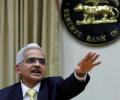
Chances of a rate cut in April improve if core inflation continues to ease, growth falling below the projected 7.2% for FY19 and if the global trade slowdown exacerbates.

RBI governor is seen succeeding International Monetary Fund (IMF) chief executive officer, Christine Lagarde, next year.

'The rising cost of construction, the cost of doing business, high compliance, and inflation/interest rates going up have already reduced returns to single digits.'

India's consumer price index (CPI)-based inflation could ease in the coming months thanks to the arrival of kharif crops, lower international commodity prices, and a pass through of lower input costs to consumers, the finance ministry said in its Monthly Economic Review (MER) for October, which was released on Thursday. The MER, however, warned that the global macroeconomic situation remained precarious and a recession in many advanced economies would impact India's exports. "Easing international commodity prices and new Kharif arrival are set to dampen inflationary pressures in the coming months.

India needs foreign exchange buffer reserves to insulate itself from exchange rate volatility as we have "no friends" for swap lines and Japan was the only country that helped during the taper tantrum in 2013, former RBI Governor Raghuram Rajan said on Tuesday. Participating in a virtual event organised by economic think tank NCAER, Rajan said during the taper tantrum in 2013, India asked for swap lines, and only country who helped was Japan. "We need this (foreign exchange) reserve buffer to insulate ourselves because we have no friends.
The main reason was that CPI inflation would likely remain below 4 per cent till July.

Interest rate sensitive stocks gain ground post decision

Declining vegetable prices brought down the retail inflation to a 15-month low of 4.59 per cent in December and within the comfort zone of the Reserve Bank, government data showed on Tuesday. It is for the first time during the current fiscal that the Consumer Price Index (CPI) based inflation print is below 6 per cent or in the RBI's target range of 2 to 6 per cent. The central bank factors in the CPI-based inflation while arriving at its monetary policy. The inflation in December 2020 came down from 6.93 per cent in November, mainly on account of 10.41 per cent decline in vegetable prices over the year-ago period.

Amid uncertainties arising out of the second wave of COVID-19, the Reserve Bank on Thursday said that a durable revival of private consumption and investment would be critical for sustaining economic growth post-pandemic. Observing that 2020-21 has left a scar on the economy, RBI in its annual report said, "in the midst of the second wave as 2021-22 commences, pervasive despair is being lifted by cautious optimism built up by vaccination drives." The second wave of the pandemic has prompted revision of growth projections for the current fiscal and the consensus appears to be gravitating towards RBI's forecast of 10.5 per cent, the report added.
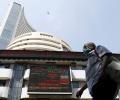
ITC was the top loser in the Sensex pack, shedding nearly 3 per cent, followed by Tech Mahindra, Axis Bank, Asian Paints, TCS, HCL Tech, HDFC and Kotak Bank.
.jpg)
Declining prices of food items like vegetables pulled down retail inflation to 5.59 per cent in July, bringing it back within the RBI's comfort zone after two months, official data showed on Thursday. The retail inflation based on the Consumer Price Index (CPI) had remained above 6 per cent during May and June. The government has mandated the RBI to maintain retail inflation at 4 per cent, with a margin of 2 per cent on either side. The CPI based inflation stood at 6.26 per cent in June 2021 and 6.73 per cent in July 2020.

ICICI Bank was the top gainer in the Sensex pack, rising around 4 per cent, followed by UltraTech Cement, Sun Pharma, Bharti Airtel, HUL, SBI, L&T, Axis Bank and IndusInd Bank. On the other hand, Reliance Industries, Bajaj Finserv, HCL Tech and HDFC were among the laggards.

Subdued prices of food items like vegetables pulled down retail inflation for the third month in a row to 5.3 per cent in August, within the RBI's comfort zone. While the Consumer Price Index (CPI)-based retail inflation declined to 5.3 per cent in August from 6.69 per cent in the same month a year ago, food inflation dipped at a much faster pace to 3.11 per cent from 9.05 per cent in August 2020. The food inflation was also lower than 3.96 per cent in preceding month of July.

investors will look to the new governor to continue the banking sector clean-up with the same urgency as Mr Rajan, who was targeting fully cleaned-up and provisioned balance sheets by March 2017

Equity benchmarks Sensex and Nifty ended on a mixed note on Wednesday as the euphoria about the Budget fizzled out, with investors going for profit-taking ahead of the Fed interest rate decision. The 30-share BSE benchmark Sensex climbed 158.18 points or 0.27 per cent to settle at 59,708.08 after it trimmed most of the intra-day gains. During the day, it had zoomed 1,223.54 points or 2 per cent to 60,773.44.

India's manufacturing sector activities witnessed the strongest rate of growth in three months in July amid improved demand conditions and easing of some local COVID-19 restrictions, a monthly survey said on Monday. The seasonally adjusted IHS Markit India Manufacturing Purchasing Managers' Index (PMI) rose from 48.1 in June to 55.3 in July, pointing to the strongest rate of growth in three months. In PMI parlance, a print above 50 means expansion while a score below 50 denotes contraction.

In a business friendly move, the Reserve Bank of India on Friday said that Real Time Gross Settlement System (RTGS), used for large value transactions, will be made available round-the-clock from December. In December 2019, the National Electronic Funds Transfer (NEFT) system was made available on a 24x7x365 basis. Currently, RTGS is available for customers from 7.00 am to 6.00 pm on all working days of a week, except second and fourth Saturdays of every month.

The government has no plan to print currency notes to tide over the current economic crisis triggered by the outbreak of COVID-19 pandemic, Finance Minister Nirmala Sitharaman informed Parliament on Monday. To a question on whether there is any plan to print currency to tide over the crisis, the finance minister said, "No Sir". Many economists and experts have suggested to the government to print more currency notes to tide over the difficult economic situation with a view to support the economy ravaged by the spread of COVID-19, and protect jobs.

Retail inflation fell to a five-month low of 4.35 per cent in September from 7.27 per cent in the year-ago period as prices of vegetables and other items declined, according to government data released on Tuesday. The moderation in Consumer Price Index-based inflation is in line with the assessment of Reserve Bank Governor Shaktikanta Das who recently projected substantial softening of retail inflation. The CPI inflation was at 5.3 per cent in August and at 7.27 per cent in September 2020.
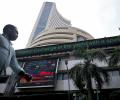
RBI policy, macro data, company earnings to decide market course this week: Experts

India's macroeconomic situation is improving fast and the country's GDP growth will turn positive in the third and fourth quarters of the current financial year, eminent economist Ashima Goyal said on Sunday. Goyal in an interview to PTI said the management of the COVID-19 pandemic and gradual unlocks announced by the government have helped in avoiding multiple COVID-19 peaks. The growth estimates by different agencies are being continuously revised, she said.

The reform priorities are clear: enhance savings, improve productivity. Just 25 basis points of moving interest rate up or down would not boost investment: Former RBI Governor Y V Reddy.

Inflation targeting has worked well and the government must stay with it, and the framework is going to work well in the period ahead also, former RBI Governor D Subbarao said on Thursday. He also said low inflation contributes to sustainable growth. Addressing the 'Times Network India Economic Conclave' virtually, Subbarao said the government's proposal to privatise some public sector units is not akin to selling family silver but it is a route for putting India on a sustainable growth path.
 © 2026 Rediff.com - Advertise with us - Disclaimer - Privacy Policy - Sitemap - Feedback - About us - Terms of use - Grievances